
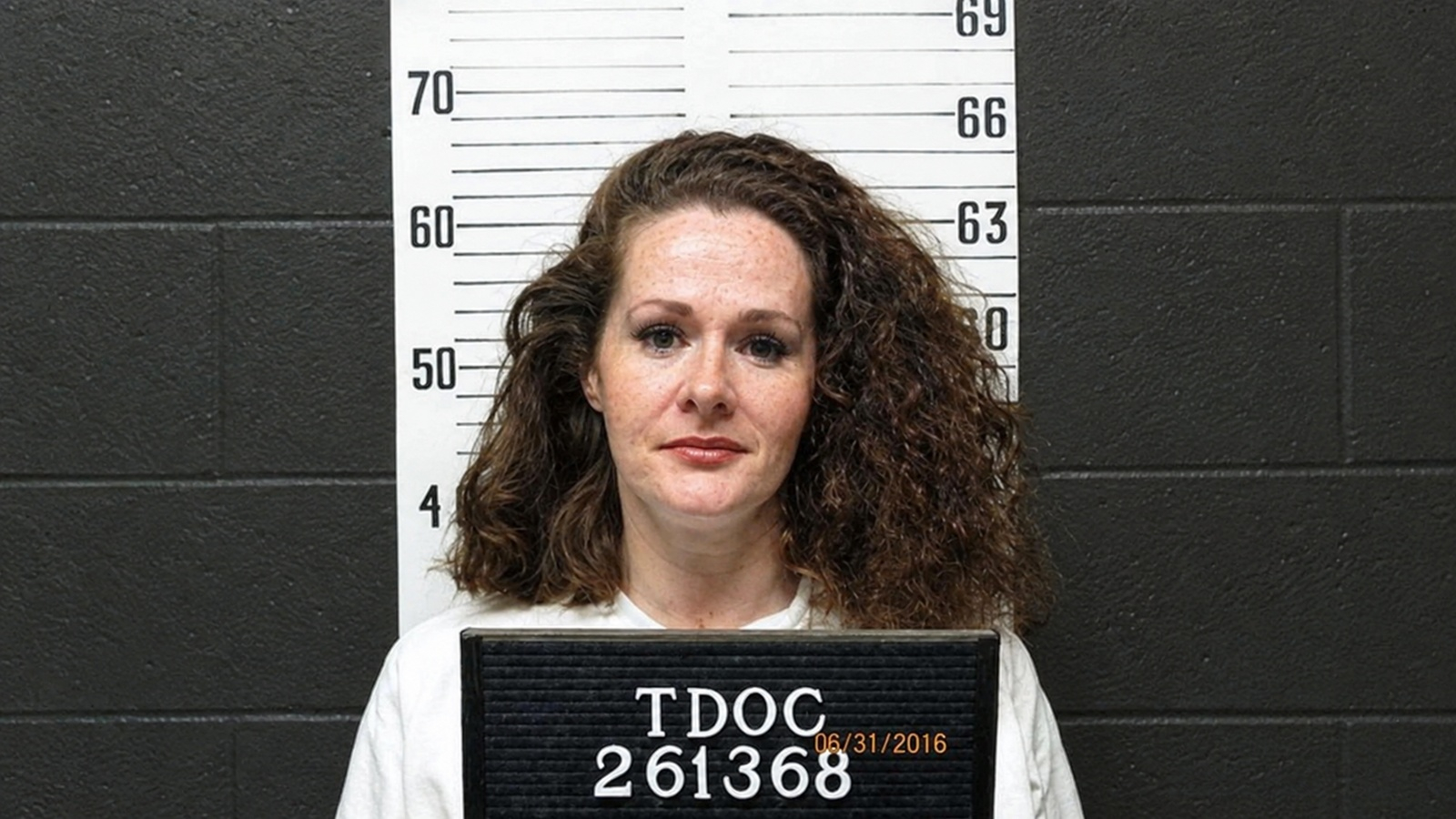
NASHVILLE, Tenn. — Christa Pike was supposed to die on September 30, 2026. She didn’t.
Instead, the 50-year-old death row inmate — the only woman on Tennessee’s death row — survived two doses of what is supposed to be a lethal injection of pentobarbital. Witnesses reported hearing her snoring loudly over a speaker nearly an hour after the execution began. By the time prison officials quietly shut off the microphone and escorted journalists out of the witness room, Pike was reportedly still breathing.
What was meant to be Tennessee’s first execution of a woman in more than 200 years has instead become one of the most confounding lethal injection failures in modern American history. Governor Bill Lee has suspended executions for the remainder of the year and ordered a comprehensive third-party review.
Here’s what happened, why it happened, and what comes next.
Who Is Christa Pike?
Christa Gail Pike has spent nearly three decades on death row at Riverbend Maximum Security Institution in Nashville. She was born in West Virginia and grew up in a home marked by severe instability — neglect, physical abuse, and sexual abuse by multiple adults, according to court records and psychological evaluations cited in her clemency petition.
She was diagnosed with bipolar disorder and post-traumatic stress disorder during her incarceration. A forensic psychologist later testified that Pike suffered from untreated manic episodes and PTSD at the time of the crime, which influenced “how threatened she felt by the girl she ended up killing and her lack of emotional control.”
In 1995, Pike was an 18-year-old student at the Knoxville Job Corps, a federal job training program. She was dating a fellow student named Tadaryl Shipp.
The Crime That Put Her on Death Row
On January 12, 1995, Pike and Shipp, then 17, lured 19-year-old Colleen Slemmer into a wooded area near the University of Tennessee’s agriculture campus. A third accomplice, 18-year-old Shadolla Peterson, served as a lookout.
Pike believed Slemmer was trying to steal Shipp’s attention. What followed was a prolonged and horrific attack. Prosecutors described how Pike kneed Slemmer’s head, threw her to the ground, and repeatedly kicked her. When Slemmer tried to flee, Pike sliced her stomach with a box cutter. As Slemmer begged for her life, Pike cut her throat. At some point, Shipp carved a pentagram into Slemmer’s chest while she was still alive. The fatal blow came when Pike smashed a chunk of asphalt into the back of Slemmer’s head.
The beating was so savage that Pike took a fragment of Slemmer’s skull as a “souvenir” and later bragged about the killing to other Job Corps students.
Pike, Shipp, and Peterson were arrested three days later. All three confessed. Peterson testified against the others and received probation. Shipp, because he was 17, was not eligible for the death penalty and received life in prison. Pike was convicted of first-degree murder and conspiracy and, in 1996, became the youngest woman ever sentenced to death in the United States.
A Case Marred by Unheard Evidence
Pike’s legal team argued for decades that her trial was fundamentally unfair. The central claim: her original defense attorneys failed to present evidence of her severe childhood abuse and trauma to the jury that sentenced her to death. A 1995 forensic report documenting that abuse was never introduced at trial.
Her lawyers also pointed to evolving scientific understanding of adolescent brain development. Research shows young people’s brains continue developing well beyond their teenage years, affecting impulse control and decision-making. They argued that an 18-year-old today would not receive a death sentence for the same crime.
In 2021, Pike was diagnosed with bipolar disorder in prison and has been medicated since. A 2023 evaluation found she suffered from untreated manic episodes and PTSD at the time of the murder.
Pike filed a 226-page clemency petition with Governor Lee, citing her childhood trauma, mental illness, and evidence that her mother drank heavily during pregnancy, contributing to faulty brain development. Governor Lee denied the petition on September 28, 2026, stating he was “upholding the sentence of the State of Tennessee.”
The Execution That Wasn’t
Pike’s execution was scheduled for 10 a.m. on September 30, 2026. The day was chaotic from the start.
Less than two hours before the scheduled execution, a three-judge panel on the U.S. Court of Appeals for the 6th Circuit issued a temporary stay to review whether Pike’s childhood sexual abuse claims had been adequately considered. The U.S. Supreme Court lifted that stay hours later, clearing the way for the execution to proceed.
What happened next has no precedent in modern American capital punishment.
According to journalists who witnessed the execution, Pike received the first dose of pentobarbital and complained of a burning sensation in her arm. “It feels like my arm is going to burst,” she said aloud, asking if that was normal. She received a second dose approximately an hour later. Still, she did not die. Witnesses reported hearing Pike snoring loudly — a sign her breathing had not stopped. At 8:53 p.m., the microphone in the witness room was turned off, and reporters were escorted out.
An ambulance was seen arriving and leaving the prison. Pike’s attorneys confirmed she was “still alive” after the second dose and was transported to a hospital.
The Aftermath: Questions Without Answers
The Tennessee Department of Correction defended its handling of the execution, stating that “every step of the state’s lawful, established execution protocol approved by the Attorney General’s Office” was followed, and that “the protocol does not allow for additional procedures beyond what was carried out.”
Pike’s lawyers issued a statement accusing the state of failing to carry out a lawful execution “once again.” They cited “difficult vein access, blown veins, degraded pentobarbital, no emergency medical care available when things inevitably go wrong, all under a protocol that remains veiled in secrecy.”
Governor Lee subsequently suspended all executions in Tennessee for the remainder of the year and ordered a comprehensive third-party review of the failed procedure.
What Happens Now?
Pike’s legal status remains in limbo. Her attorneys filed an emergency motion with the Supreme Court during the procedure, arguing that their client was suffering unnecessarily. The state has not announced whether it will attempt to execute Pike again or seek another resolution.
For Colleen Slemmer’s mother, May Martinez, the botched execution represented yet another agonizing delay in a quest for closure that has spanned three decades. Martinez had traveled to Nashville for the execution and planned to sit in the front row clutching a photograph of her daughter.
Pike, for her part, had said she was not afraid of dying, only of the process. In a letter before the execution, she wrote, “I’m ready to be free.”
The case now sits at an extraordinary crossroads — a woman sentenced to death for a crime she committed as a teenager, a state that failed to carry out its own protocol, and a victim’s family still waiting for the justice they were promised more than thirty years ago.
Leave a Reply