
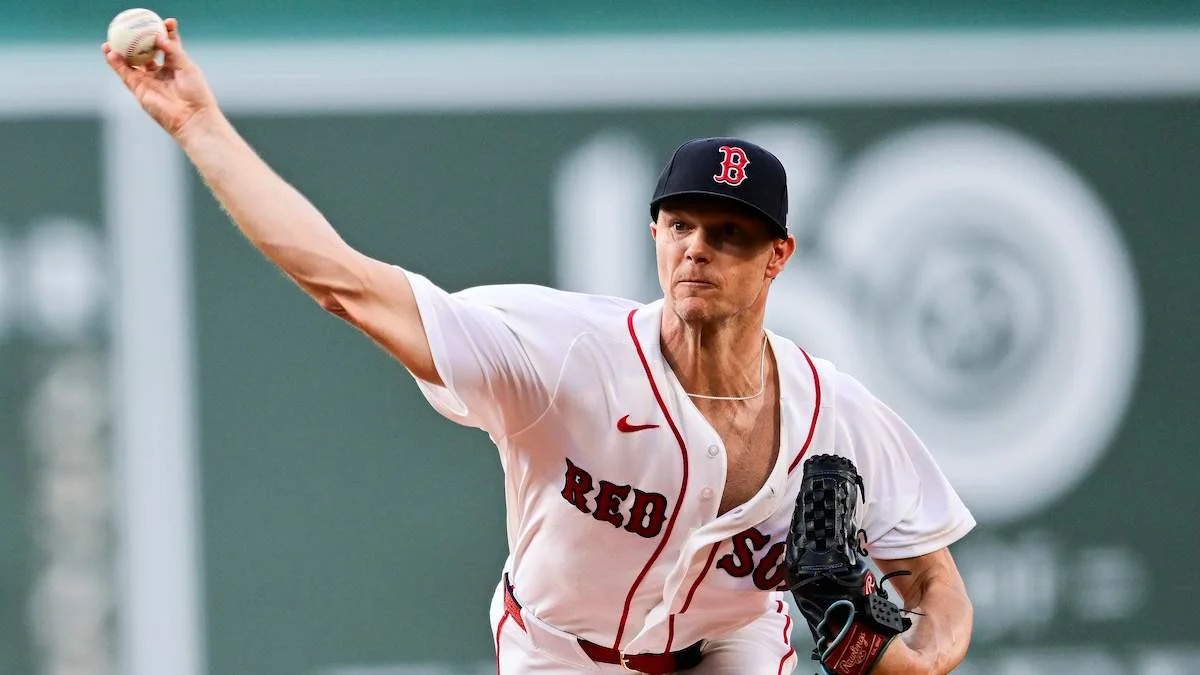
BOSTON – When the Red Sox traded for Sonny Gray last November, they thought they were getting a reliable No. 2 starter. What they got instead was a Cy Young-caliber ace who carried a depleted rotation, made franchise history, and nearly saved Boston’s season in the Bronx.
Gray finished the 2026 regular season with an 18-5 record and a 2.72 ERA, both career bests in his age-36 campaign. He tied for the major league lead in wins, made 27 starts, and threw 169 innings with a 1.15 WHIP and 149 strikeouts against just 46 walks. For a pitcher who was acquired to slot behind Garrett Crochet, Gray became the anchor when Crochet went down with an early-season injury.
The Regular Season: Career-Best Numbers
Gray’s 2026 campaign was the best full season of his 14-year career. He set career highs in wins (18) and ERA (2.72), surpassing his previous best marks from his Oakland days. His 2.72 ERA was good for a 66 ERA- on FanGraphs, meaning he was 34 percent better than league average after adjusting for ballpark and opponent.
The consistency was remarkable. Gray recorded 14 quality starts in his first 21 outings alone, and he allowed three earned runs or fewer in 16 of those 21 starts. From May 6 through mid-July, he went 10-0 with a 1.94 ERA over 13 starts, a stretch that transformed Boston’s season.
Making Red Sox History
Gray didn’t just pitch well. He etched his name alongside a Boston legend.
On August 21, after earning his 16th win in 24 starts, Gray joined Tim Wakefield (1995) as the only Red Sox pitchers in the last 50 years to win at least 16 of their first 24 starts with the franchise. Gray’s line at that point was 16-3 with a 2.79 ERA, nearly identical to Wakefield’s 16-5, 2.71 mark.
He also became the first American League pitcher to reach 14 wins on August 5, throwing six scoreless innings against the White Sox with eight strikeouts.
The No-Hit Bid Against the Yankees
The defining moment of Gray’s regular season came on June 28 at Fenway Park. Facing the rival Yankees, Gray took a no-hitter into the eighth inning before Amed Rosario broke it up with one out. He finished with 7.1 scoreless innings, nine strikeouts, and one hit allowed in a game Boston won 5-4 in extra innings.
That start sparked a four-game sweep of New York and helped turn Boston’s season around. The Red Sox had started 32-46 before rallying to an 87-75 finish and a playoff berth.
The Playoff Heartbreak
Gray’s season ended in the most painful way possible: on the mound at Yankee Stadium, with the season on the line.
In Game 2 of the AL Wild Card Series, Gray pitched 4.2 innings, allowing two runs on six hits with five strikeouts and no walks. He cruised through three scoreless frames before Luis Garcia homered in the fourth. In the fifth, with two runners on and two outs, manager Chad Tracy pulled him at just 70 pitches. The bullpen immediately surrendered both inherited runners, and New York erupted for six runs in the sixth to sweep Boston out of the playoffs.
Gray didn’t hide his frustration afterward. “I would have liked to live or die with me in that moment,” he said. “I think I’m the best pitcher in the American League going through the order the third time. I think that’s a fact.”
He was right. Gray held hitters to a .180 average and a 1.99 ERA when facing a lineup for the third time in 2026.
What It Means for 2027
Gray enters the offseason with a $30 million mutual option for 2027, and retirement has been floated as a possibility. But after a season like this, the Red Sox should be doing everything they can to keep him.
He’s a three-time All-Star with 143 career wins, and he proved in 2026 that he’s still one of the best pitchers in baseball. For a franchise that has been searching for stability at the top of its rotation for years, Gray provided exactly that.
The ending wasn’t what anyone wanted. But the body of work was undeniable. Sonny Gray’s 2026 season was one of the best by a Red Sox pitcher in decades, and it’s the reason Boston was playing meaningful October baseball at all.
Leave a Reply