
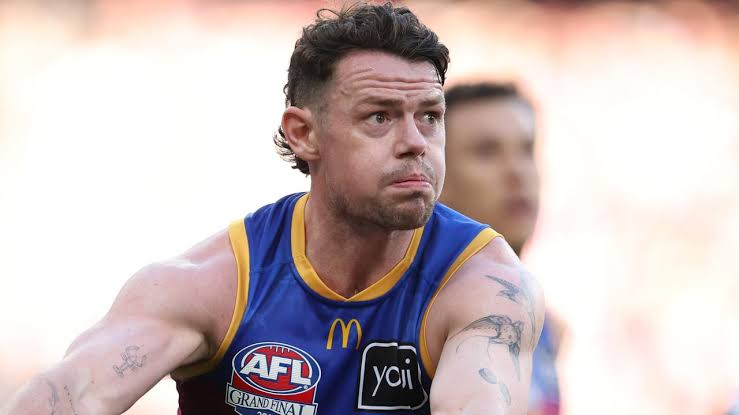
Lachie Neale’s place in the 2026 AFL Grand Final looked lost after the Brisbane Lions midfielder received a one-match suspension for striking Hawthorn’s Jack Ginnivan. Less than a week later, the two-time Brownlow medallist is free to play after the AFL Appeal Board overturned the ban and replaced it with a $10,000 fine.
So, why was Lachie Neale suspended in the first place? The original penalty came from an off-the-ball incident during Brisbane’s preliminary final victory over Hawthorn, where Neale was found to have struck Ginnivan in the stomach. The Match Review Officer graded the action as intentional conduct, medium impact and body contact, which carried a one-match suspension.
The striking finding itself was not erased at the final appeal. Instead, Brisbane successfully argued that Neale’s exceptional disciplinary record across 320 AFL games justified replacing the suspension with a fine.
Why Was Lachie Neale Suspended?
Neale’s disciplinary problem began during the first quarter of Brisbane’s preliminary final against Hawthorn at the MCG on September 19.
Jack Ginnivan was involved in an off-the-ball wrestle with Brisbane forward Eric Hipwood when Neale approached the contest. Match footage showed Neale making forceful contact with Ginnivan’s stomach, sending the Hawthorn player to the ground.
Match Review Officer Michael Christian assessed the incident as intentional conduct, medium impact and body contact.
Under the AFL’s grading system, that combination resulted in a one-match suspension.
The timing made the penalty particularly significant. Brisbane had won the preliminary final 131-122, putting the Lions into the Grand Final against Fremantle. A one-match ban therefore meant Neale would miss the biggest game of the season rather than an ordinary home-and-away fixture.
What Did Lachie Neale Say About the Ginnivan Incident?
Neale initially disputed the AFL’s description of the contact.
At his Tribunal hearing, he argued that the incident was closer to a bump or body check than a strike. He said his shoulder and chest made contact with Ginnivan before his arm wrapped around the Hawthorn player.
Neale also suggested Ginnivan may have exaggerated the effect of the contact while attempting to win a free kick.
The Tribunal rejected that account.
Tribunal chair Jeff Gleeson KC said the footage showed a forceful blow delivered with a swinging arm and open hand. The panel concluded that the action was an intentional strike to Ginnivan’s body.
Why Did the AFL Tribunal Uphold the Ban?
Brisbane presented three main arguments when challenging the original suspension.
The Lions first argued that the contact should not be classified as a strike. If that failed, they argued that its impact should be graded low rather than medium, which would have reduced the penalty to a fine.
Their third argument relied on the AFL’s “exceptional and compelling circumstances” provision.
Neale entered the hearing having played 320 AFL matches without ever serving a suspension. Brisbane argued that such a disciplinary record justified reducing the penalty even if the Tribunal upheld the striking charge.
The Tribunal rejected all three arguments.
It accepted that Neale had an outstanding career record but noted that he had previously been found guilty of several offences, including strikes to opponents’ bodies, even though none had previously resulted in suspension.
The Tribunal also considered the intentional nature of the action important when deciding whether his record was enough to trigger exceptional and compelling circumstances.
As a result, the one-match suspension remained in place after a hearing lasting approximately four and a half hours.
Why Did Brisbane Appeal Again?
The AFL Tribunal was not Brisbane’s final legal avenue.
The Lions took the case to the AFL Appeal Board on September 24, arguing specifically about the way the Tribunal had applied the exceptional and compelling circumstances provision.
By the time of the final appeal, Brisbane was no longer trying to prove that Neale had not committed an intentional, medium-impact strike to the body.
Instead, the club focused on the sanction.
Brisbane representative Adrian Anderson argued that Neale’s record of 320 games without suspension was sufficiently exceptional to justify a fine rather than forcing him to miss a Grand Final.
That narrower argument ultimately succeeded.
Why Was Lachie Neale’s Suspension Overturned?
The Appeal Board found that the Tribunal had made an error when assessing whether exceptional and compelling circumstances applied.
Appeal Board chair Richard Loveridge explained that the intentional nature of Neale’s conduct was already an established element of the charge. The Board concluded that the Tribunal should not have effectively used that element again to prevent Neale from benefiting from the exceptional-circumstances provision.
The central question instead became whether Neale’s record was sufficiently exceptional.
The Appeal Board decided that it was.
Neale had completed 320 AFL games without previously serving a suspension, a record the Board described as “exemplary.” The appeal was therefore allowed and his one-match ban was replaced by a $10,000 fine.
Importantly, the ruling does not mean the Board decided Neale did nothing wrong. The striking finding remained, but the punishment changed.
Lachie Neale Is Free to Play in the Grand Final
The successful appeal means Neale can take his place in Brisbane’s Grand Final against Fremantle at the MCG on Saturday, September 26.
The match is scheduled for 2:30 p.m. AEST.
His availability is a major selection boost for Brisbane as the club attempts to win a third consecutive premiership.
Neale is also facing his former club. The midfielder began his AFL career with Fremantle before joining Brisbane, adding another layer to an already significant Grand Final.
Following the decision, Neale briefly thanked the Appeal Board chairman. AFL coverage reported that he had put his head in his hands when the decision was delivered before learning he was officially cleared to play.
Why Neale’s 320-Game Record Became So Important
Neale’s disciplinary history was ultimately the decisive factor.
The 33-year-old has played 15 AFL seasons and won two Brownlow Medals. Before the Ginnivan incident, he had never been suspended despite playing 320 matches.
His record did not automatically protect him from punishment. AFL rules specifically state that a good disciplinary history does not guarantee a reduced sanction.
However, the rules allow a player with an exemplary record to argue that it contributes to exceptional and compelling circumstances when a classifiable offence reaches the Tribunal.
The Tribunal initially decided Neale had not crossed that threshold.
The Appeal Board reached the opposite conclusion.
That difference explains why the same incident initially appeared certain to cost Neale a Grand Final before eventually resulting only in a $10,000 fine.
Did Lachie Neale Get the Strike Charge Removed?
No.
The final appeal was not a finding that the Ginnivan incident never happened or that Neale’s conduct was acceptable.
Brisbane accepted at the Appeal Board stage that the offence had been classified as an intentional strike with medium impact to the body. The successful argument concerned the appropriate punishment once that offence had been established.
The outcome is therefore best described as Neale having his suspension overturned rather than his entire charge dismissed.
He remains sanctioned for the incident through the $10,000 fine but does not have to serve the one-match ban.
What the Decision Means for Brisbane
Neale’s clearance resolves one of the biggest selection questions of Grand Final week.
Brisbane had been preparing for the possibility of playing without one of its most experienced midfielders, with teammates publicly discussing a “next man up” approach while the appeal process continued.
That contingency is no longer required because of suspension.
Neale can now prepare to face Fremantle as Brisbane pursues another premiership, ending several days of uncertainty that began with an incident lasting only seconds during the preliminary final.
The answer to “Why is Lachie Neale suspended?” has therefore changed quickly. He was suspended because the Ginnivan strike was graded intentional, medium impact and body contact. As of September 24, however, he is no longer suspended after the Appeal Board ruled that his exemplary 320-game disciplinary record amounted to exceptional and compelling circumstances.
FAQ
Why was Lachie Neale suspended?
Lachie Neale originally received a one-match suspension for striking Hawthorn’s Jack Ginnivan in the stomach during Brisbane’s 2026 preliminary final. The incident was graded intentional conduct, medium impact and body contact.
Is Lachie Neale still suspended?
No. The AFL Appeal Board overturned his one-match suspension on September 24 and replaced it with a $10,000 fine.
Can Lachie Neale play in the 2026 AFL Grand Final?
Yes. Neale is eligible to play for Brisbane against Fremantle at the MCG on September 26.
Why did Lachie Neale win his appeal?
The Appeal Board determined that Neale’s record of 320 games without a previous suspension was exemplary and justified applying the AFL’s exceptional and compelling circumstances provision.
How much was Lachie Neale fined?
Neale was ordered to pay a $10,000 fine after his suspension was overturned.
Who did Lachie Neale strike?
The incident involved Hawthorn player Jack Ginnivan during the Lions’ preliminary final victory.
Did the Appeal Board clear Lachie Neale of striking?
No. The successful appeal changed the sanction from a one-match suspension to a fine. Brisbane’s final appeal focused on exceptional and compelling circumstances rather than overturning the established classification of the strike.
Leave a Reply