
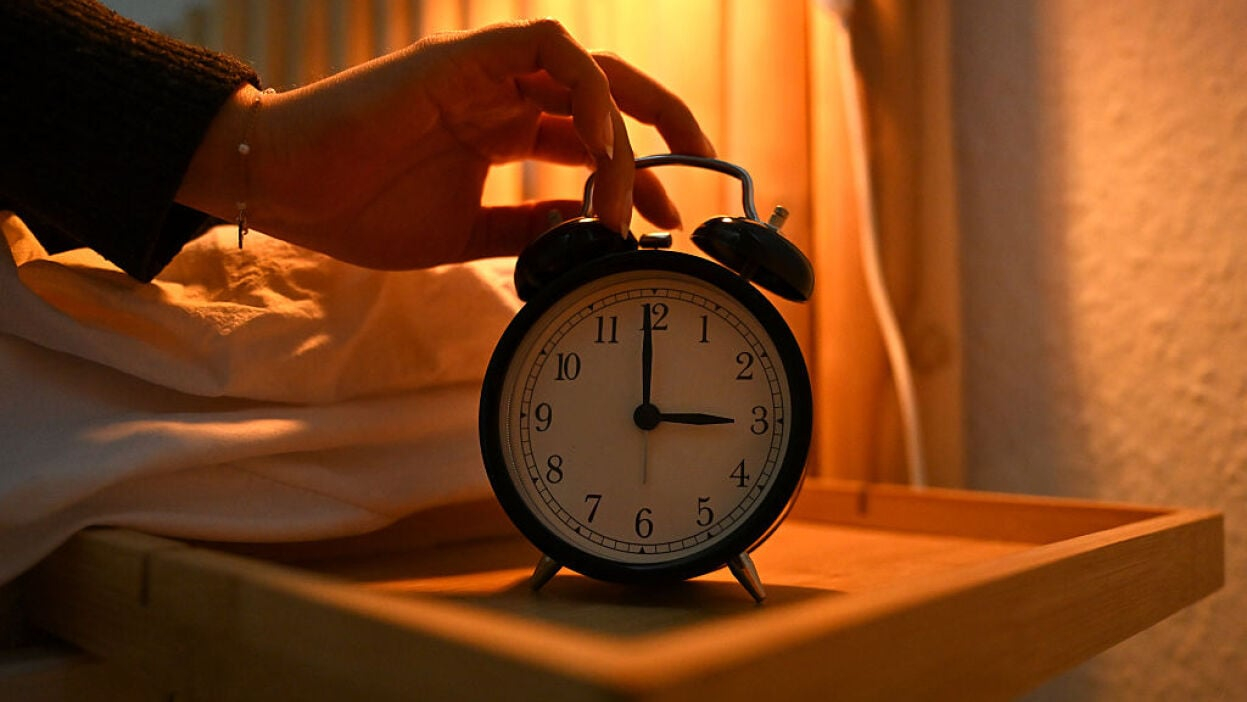
Twice a year, millions of people around the world perform the same ritual. They adjust their clocks, grumble about lost sleep, and wonder why we still do this. Daylight saving time has been a part of modern life for over a century, yet it remains one of the most debated and misunderstood practices in our daily routines.
So, what exactly is daylight saving time, and why do we change our clocks twice a year?
What Is Daylight Saving Time?
Daylight saving time, often called DST or summer time, is the practice of advancing clocks by one hour during the warmer months to extend evening daylight. When DST begins, clocks are set forward one hour, meaning the sun rises later in the morning and sets later in the evening.
The goal is simple. Shift an hour of daylight from the early morning, when most people are asleep, to the evening, when they are more likely to be active. When daylight saving time ends, clocks are set back one hour, returning to standard time.
When Do the Clocks Change in 2026?
The timing of daylight saving time varies by country and hemisphere. In the United States, DST begins on the second Sunday of March and ends on the first Sunday of November.
For 2026, that means spring forward on Sunday, March 8, at 2 a.m. local time, and fall back on Sunday, November 1, at 2 a.m. local time.
In Europe, the clocks change on the last Sunday of March and the last Sunday of October. For 2026, that falls on March 29 and October 25. In the Southern Hemisphere, the pattern is reversed, with DST typically running from late September or early October through early April.
The Origins: From Benjamin Franklin to World War I
The idea of adjusting clocks to make better use of daylight is older than you might think. Benjamin Franklin is often credited with first proposing something like daylight saving time in a 1784 essay. He suggested that Parisians could save candle wax by rising earlier and making better use of natural light.
However, the idea did not become government policy until World War I. Germany was the first country to adopt daylight saving time in 1916, as a way to conserve fuel for the war effort. Britain and other European countries quickly followed suit.
The United States adopted daylight saving time in 1918 as part of the Standard Time Act, which also established the country’s time zones. The law was unpopular, particularly among farmers, and was repealed after the war. It returned during World War II as War Time and was later standardized by the Uniform Time Act of 1966.
The Standard Time Act and the Railroad Connection
To understand daylight saving time, you have to understand standard time. Before the late 1800s, time was local. Noon in one town could be minutes different from noon in the next town over. This created chaos for railroads trying to keep schedules across long distances.
In 1883, U.S. and Canadian railroads adopted four standard time zones to streamline service. This was not universally welcomed. Some evangelical Christians argued that time came from God and railroads should not be messing with it.
The Standard Time Act of 1918 formalized these time zones into law and introduced daylight saving time for the first time in the United States.
The Energy Question: Does DST Actually Save Power?
The original rationale for daylight saving time was energy conservation. By shifting daylight to the evening, people would rely less on artificial lighting, reducing the demand for electricity and fuel.
The evidence, however, is mixed. A California study found that daylight saving time cut peak electricity use by about three percent, shifting demand to cheaper morning hours. A 2008 study of Indiana households found the opposite. Daylight saving time actually increased electricity demand, likely because the reduced need for lighting was outweighed by increased demand for heating and cooling.
The truth is that modern energy use is more complex than it was in 1916. Air conditioning, heating, and electronic devices all play a role, and the net effect of DST varies by region and climate.
Health and Safety: The Circadian Rhythm Disruption
One of the strongest arguments against changing clocks twice a year is the impact on human health. Our bodies operate on a circadian rhythm, an internal clock that regulates sleep, alertness, and many other biological processes. Shifting the external clock by an hour disrupts that rhythm.
Studies have found a ten percent increase in heart attacks on the Monday following the spring time change. A 2009 study in the journal Sleep Medicine suggested it can take some people up to three weeks to fully adjust.
There is also evidence linking the transition to an increase in car accidents due to sleep deprivation. A 2016 study attributed over 30 deaths in fatal automobile crashes between 2002 and 2011 to the sleep loss caused by the spring transition. On the flip side, year-round daylight saving time has been estimated to potentially save hundreds of lives annually by reducing pedestrian and motor vehicle fatalities in the evening darkness.
The Great Debate: Should We Stop Changing Clocks?
The practice of changing clocks twice a year is increasingly unpopular. A 2019 poll found that 71 percent of Americans preferred to stop the practice entirely, though they were divided on whether to keep daylight saving time permanently or return to standard time year-round.
Lawmakers have taken notice. The Sunshine Protection Act, which would make daylight saving time permanent across the United States, passed the Senate unanimously in 2022 but stalled in the House. A version of the bill passed the House in 2026.
States across the country have also taken action. Florida, Colorado, Delaware, and others have passed legislation to adopt permanent daylight saving time, pending federal approval. The Uniform Time Act allows states to opt out of DST and observe standard time year-round, but it does not allow them to observe DST permanently without an act of Congress.
Meanwhile, several countries have already abandoned the clock change entirely. Russia, Turkey, Brazil, Mexico, and China no longer switch. In the European Union, the European Parliament voted to end seasonal time changes in 2021, but the measure has not yet been implemented as member states debate which time to keep.
Who Still Observes Daylight Saving Time?
Daylight saving time is used in about 70 countries worldwide. It is most common in regions farther from the equator, where daylight hours vary significantly between summer and winter. Countries closer to the equator have less seasonal variation in daylight and are less likely to observe DST.
In the United States, only Arizona, Hawaii, Puerto Rico, Guam, American Samoa, the U.S. Virgin Islands, and the Northern Mariana Islands do not observe daylight saving time.
In Australia, Queensland, Western Australia, and the Northern Territory do not switch to daylight saving time.
The Future of Daylight Saving Time
The debate over daylight saving time is not going away. Proponents argue that permanent daylight saving time would lead to brighter evenings, more outdoor activity, and potential economic benefits for businesses that rely on after-work customers. Opponents worry about dark winter mornings, especially for schoolchildren waiting for buses, and argue that the health effects of the clock change are not worth the benefits.
What is clear is that the current system, with its twice-yearly disruptions, is increasingly out of step with modern life. Whether the world moves toward permanent daylight saving time, permanent standard time, or continues the status quo remains to be seen. For now, the clocks will keep changing, and the arguments will keep going.
Leave a Reply