
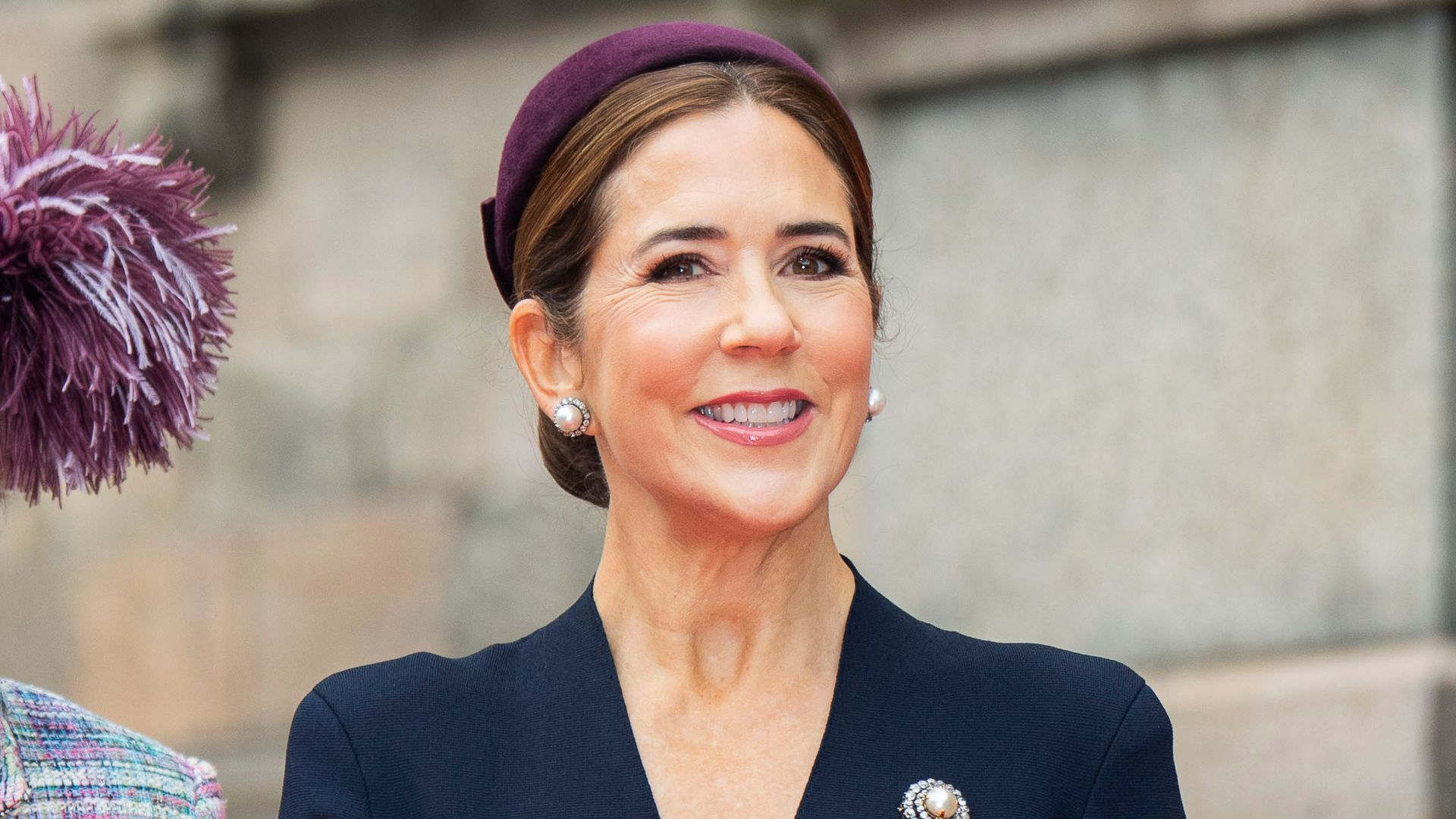
Queen Mary of Denmark has one of the most remarkable modern royal stories in Europe. Born Mary Elizabeth Donaldson in Hobart, Tasmania, she went from an Australian childhood and a career in advertising and business to becoming Queen of Denmark alongside her husband, King Frederik X.
Her journey became part of Danish history when Frederik took the throne following Queen Margrethe II’s abdication on January 14, 2024. Mary simultaneously became Her Majesty Queen Mary, making her the first Australian-born queen of a European monarchy. More than two years into the role, she continues to combine traditional royal duties with long-standing work involving children, social isolation, domestic violence, health and sustainability.
Who Is Queen Mary of Denmark?
Queen Mary was born Mary Elizabeth Donaldson on February 5, 1972, in Hobart, Tasmania. She is the youngest child of John Dalgleish Donaldson and Henrietta Clark Donaldson, both of whom were born in Scotland before moving to Australia.
Her father was a professor of applied mathematics, while her mother worked as executive assistant to the vice-chancellor of the University of Tasmania. Mary grew up with two sisters, Jane and Patricia, and a brother, John.
Although her adult life became closely associated with Denmark, her upbringing was distinctly Australian. Her schooling included time in Tasmania, apart from a period as a young child in Houston, Texas. She later attended Taroona High School and Hobart Matriculation College.
Mary’s father died in April 2026, years after the death of her mother in 1997. The royal family’s official biography continues to reflect her strong connections to both her Australian upbringing and Scottish family heritage.
Her Education and Career Before Royal Life
Long before becoming Queen Mary of Denmark, Mary built a professional career that had nothing to do with royalty.
She enrolled at the University of Tasmania in 1989 and graduated in 1994 with a bachelor’s degree in Commerce and Law. She later completed qualifications in advertising and direct marketing.
Her working life took her through several major advertising and business roles. After university, she moved to Melbourne and joined DDB Needham before working with Mojo Partners. She later spent time in Edinburgh with Rapp Collins Worldwide and returned to Sydney for a position with Young & Rubicam.
Mary also worked in property sales before moving to Europe. After briefly teaching business English in Paris, she relocated to Denmark in 2002 and worked as a project consultant with Microsoft Business Solutions, focusing on business development, communication and marketing.
That professional background remains an interesting part of her public story. Unlike royals who were born directly into royal households, Mary had already completed university and established an international business career before joining Denmark’s royal family.
How Queen Mary Met King Frederik
The love story between Mary Donaldson and the future King Frederik began far from Copenhagen.
The pair famously met in Sydney during the 2000 Summer Olympics. Mary was 28 at the time and reportedly did not initially realise that the man she had met was the Crown Prince of Denmark.
Their relationship gradually became public, and Mary eventually moved to Europe as the couple became more serious.
On May 14, 2004, Mary married Crown Prince Frederik at Copenhagen Cathedral. The wedding celebrations continued at Fredensborg Palace. With the marriage, she became Crown Princess Mary of Denmark.
The couple later welcomed four children. Crown Prince Christian was born in 2005, Princess Isabella followed in 2007, and twins Prince Vincent and Princess Josephine arrived in 2011.
Christian became heir to the Danish throne when his father became King Frederik X in 2024. The royal family maintains residences at Frederik VIII’s Palace at Amalienborg and the Chancellery House at Fredensborg Palace.
How Mary Became Queen of Denmark
Queen Margrethe II announced her decision to abdicate after more than five decades on the Danish throne. The formal succession took place on January 14, 2024.
During a Council of State at Christiansborg Palace, Margrethe signed her declaration of abdication. Frederik immediately became King Frederik X, Mary became Queen Mary, and their eldest son Christian became Crown Prince.
The transition represented a historic moment for both Denmark and Australia. Mary’s rise from Hobart to the Danish royal household had already attracted international attention, but becoming queen placed her in an entirely different position within the monarchy.
Denmark operates as a constitutional monarchy. The sovereign represents the country and performs formal duties but cannot independently carry out political acts. Queen Mary’s position primarily involves supporting the King, representing Denmark and taking part in royal, humanitarian and cultural engagements.
Mary also has experience as a rigsforstander, a role for which she was formally approved in 2019. It allows her to undertake certain head-of-state responsibilities when the sovereign is unable to do so, such as during travel abroad.
The Mary Foundation and Her Social Work
One of the clearest examples of Queen Mary’s long-term public work is the Mary Foundation.
Established in 2007, the foundation focuses on reducing social isolation and helping people feel included in their communities. Its three main areas of work are bullying and well-being, domestic violence and loneliness.
Mary serves as chair of the foundation’s board and has remained closely involved with its initiatives.
Her work has continued after becoming queen. In September 2026, she took part in celebrations marking the 10th anniversary of Antibulli, an initiative designed to promote healthier and more inclusive environments for children involved in sport.
Around 80 children joined the event alongside well-known sports ambassadors. The initiative, which began in handball, has expanded to cover seven popular children’s sports, including football, swimming, tennis, gymnastics, riding and badminton.
The Queen also oversees 25 royal patronages covering areas such as humanitarian work, health, culture, science, women’s rights, sustainability and nature conservation.
Queen Mary’s Role Today
More than two decades after marrying into the Danish royal family, Queen Mary has moved well beyond the label of an Australian who married a prince.
Her life now combines ceremonial responsibilities, international representation and advocacy built around issues she has supported for years. She has also completed extensive training with Denmark’s Home Guard, progressing from private in 2008 to honorary major in 2023.
Her transition from Crown Princess to Queen did not completely change the causes associated with her public work. Instead, it expanded the platform from which she represents them.
For Australians, Queen Mary’s story remains unusual because her early life began thousands of kilometres from the European royal household she would eventually join. For Denmark, she has now spent more than two decades building a public role alongside Frederik.
From a university student in Tasmania to a marketing professional, Crown Princess and ultimately Queen of Denmark, Mary’s path is one of the most distinctive stories in today’s European royalty.
Leave a Reply