
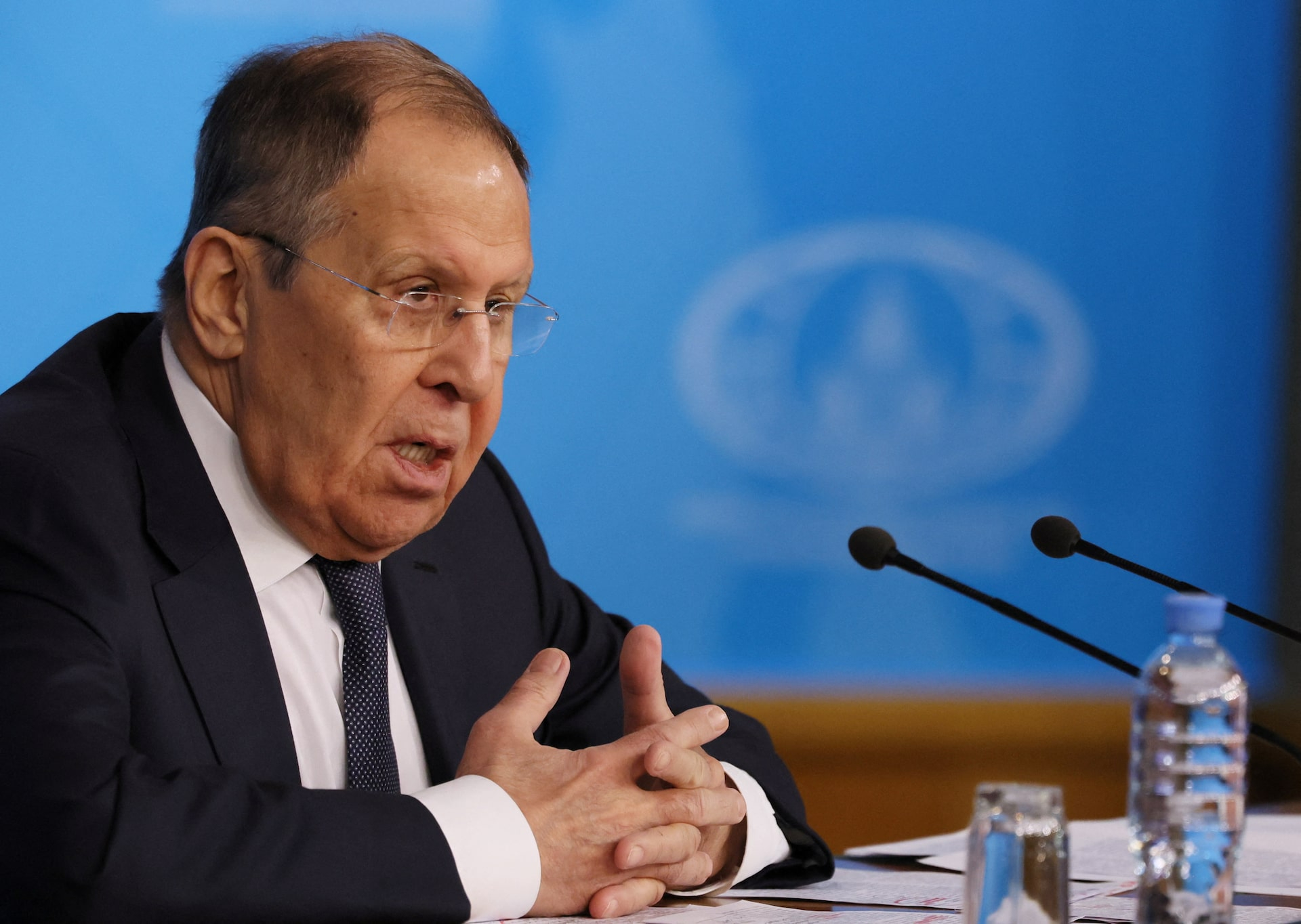
Sergey Lavrov has never been shy about provoking the West. But his latest comments about the United Kingdom went further than usual: Russia’s foreign minister publicly questioned whether the country will even exist in its current form, pointing to the push for independence in Scotland, Wales, and Northern Ireland.
Speaking at an International Youth Festival in Yekaterinburg in mid-September 2026, Lavrov said he did “not know what will become of the country called Great Britain,” according to The Times. He referenced “the Celts,” Wales, Ireland, and Scotland, whom he said are “now seeking to hold referenda.”
The comments landed just days after a landmark declaration signed by the leaders of all three devolved nations.
What Lavrov Actually Said
According to multiple reports, Lavrov’s remarks were made during an “Open Dialogue” session at the youth festival. His key statements included:
On the UK’s future: “I do not know what will become of the country called Great Britain. There the Celts want to hold a referendum, Wales, Northern Ireland, Scotland.”
On the UN Security Council: “We do not advocate the expulsion of any of the permanent members of the security council. Although, of course, the scale of the British Empire, when it first took its seat in the UN security council at the organisation’s founding, has, naturally, diminished to the utmost degree.”
On Western representation: Lavrov added that the West is “overrepresented” on the Security Council, arguing the problem is not the composition of the permanent five but the disproportionate Western presence.
The Timing: A Landmark Declaration
Lavrov’s comments were not spontaneous. They came weeks after a historic memorandum of understanding signed in Cardiff on September 14, 2026, by the First Ministers of Scotland, Wales, and Northern Ireland.
The declaration, signed by John Swinney (SNP), Rhun ap Iorwerth (Plaid Cymru), and Michelle O’Neill (Sinn Féin), asserted that “each of our nations has the right to determine its own future, through democratic means and in accordance with the wishes of its people.”
It stated that “Westminster’s time is coming to an end” and called on the British government to “prepare for, plan and facilitate constitutional change.”
For the first time since devolution began in 1997, all three devolved administrations are led by first ministers committed to independence or reunification.
The Plaid Cymru Response
Lavrov’s comments drew a sharp rebuke from Plaid Cymru, the Welsh nationalist party whose leader signed the declaration.
The party stated that Wales’ constitutional future is “a matter that concerns the people of Wales and is not for the Kremlin to approve, oppose or use for its own purposes.”
The response highlighted an awkward dynamic: while the independence movements are genuine domestic political forces, having them echoed by Moscow gives unionists a convenient line of attack, that the cause is being weaponized by Russia.
Downing Street’s Reaction
UK Prime Minister Andy Burnham’s spokesperson responded to the declaration by reaffirming Burnham’s belief in the union.
“The prime minister is committed to delivering change across all four nations of the United Kingdom and believes strongly in the union,” the spokesperson said.
The spokesperson added that the UK is “at its best” when people unite around shared values “rather than division,” and that Burnham would focus on “easing pressures on household finances” rather than “engaging in constitutional debates or further referendums.”
The Broader Pattern: Lavrov’s UK Rhetoric
This is not an isolated provocation. Lavrov has spent the past year systematically targeting the UK in his public statements.
In August 2026, he warned that British missile forces involved in strikes on Russian territory could be treated as “participation in the war, with all the ensuing consequences.” He said he felt “sorry for Britain if it intends to stand with Ukraine to the very end.”
He also invoked Vladimir Putin’s earlier warning that Russia reserves the right to operate “in any area of the World Ocean” if its interests are encroached upon.
British officials rejected those threats. Prime Minister Burnham said the UK “is not a friend only when the weather is nice” and would stand with Ukraine “in its hour of greatest need.”
What Lavrov Is Really Doing
The surface reading is that Lavrov is trolling the UK, mocking its internal divisions while pretending to offer detached observation.
The deeper reading is strategic. By framing the UK as a declining power whose constituent nations are seeking to leave, Lavrov is making a broader argument about the UN Security Council. His point, that the UK’s global influence has “diminished to the utmost degree” since the Empire’s height, is a call for restructuring the international order to reflect current power realities rather than 1945 ones.
He was careful to say Russia does not advocate expelling the UK from the Security Council. But the implication was unmistakable: the UK no longer deserves its seat at the top table.
The Bottom Line
Sergey Lavrov has taken the UK’s internal fractures, the Scottish independence movement, the Welsh push for autonomy, the Irish reunification debate, and turned them into a geopolitical talking point. He is not predicting the UK’s collapse. He is suggesting that a country whose own constituent nations are discussing independence cannot credibly claim to be a global power.
Whether you see it as a cheap provocation or a pointed observation depends on your perspective. But Lavrov has made one thing clear: in Russia’s worldview, the United Kingdom is a declining power with an uncertain future. And he is perfectly happy to say so out loud.
Leave a Reply