
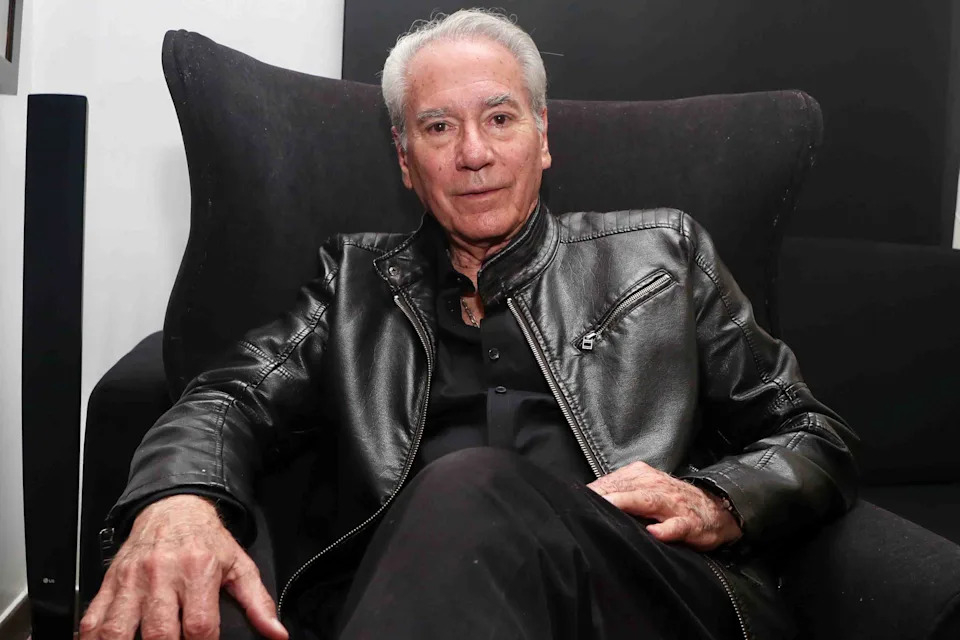
Otto Sirgo, the Cuban-Mexican actor who became one of the most recognizable faces of Mexican telenovelas across more than five decades, has died. He was 79.
The National Association of Interpreters (ANDI) confirmed his death Tuesday. No cause was immediately released, though his daughter later told reporters that his heart was “tired.”
Sirgo’s career spanned more than 50 telenovelas, 30 stage productions, and dozens of films. He was a fixture in Mexican households for generations, known for roles in Rosa Salvaje, Lazos de Amor, Niña Amada Mía, and Por un Beso. His death marks the end of an era for the golden age of Mexican melodrama.
A Life in Front of the Cameras
Otto Sirgo Haller was born December 19, 1946, in Havana, Cuba, into a family already steeped in entertainment. His father, Otto Sirgo Prieto, was a Cuban actor. His mother, Magda Haller, was a Mexican actress. His maternal grandmother, Conchita Gentil Arcos, was a star of Mexico’s Golden Age of cinema who worked alongside the legendary Tin Tan.
The family moved to Mexico when Sirgo was an infant. Though he spent four years of his childhood back in Cuba, he returned to Mexico and never left. In interviews, he described himself as Mexican “de toda la vida”—of his whole life.
Before acting, Sirgo studied electronic engineering at the National Polytechnic Institute. He abandoned it because, as he put it, “numbers weren’t for him.” He then earned a degree in tourism business administration with one of the highest averages in his class. His mother pushed him toward acting, recommending him to producers. His first paid job was an extra in a cigarette commercial. His film debut came in 1968 with La Maestra Inolvidable.
The Telenovela Icon
Sirgo’s breakthrough in television came in 1970 with La Cruz de Marisa Cruces. But it was the 1980s and 1990s that cemented his status.
In Rosa Salvaje (1987-1988), he played Ángel de la Huerta opposite Verónica Castro. The telenovela became a global phenomenon. In Lazos de Amor (1995-1996), he portrayed Eduardo Rivas alongside Lucero, winning the TVyNovelas Award for Best Supporting Actor.
His other notable credits included Alcanzar una Estrella II, El Alma No Tiene Color, Niña Amada Mía, Sortilegio, Tres Veces Ana, and Falsa Identidad. He won multiple TVyNovelas Awards and the Micrófono de Oro. He also worked as a director on productions like Dos Mujeres en mi Casa and Agujetas de Color de Rosa.
Health Struggles in His Final Years
In May 2025, Sirgo revealed he was dealing with a balance disorder that had forced him to turn down a theater role requiring physical stunts. “I had to say no to a play because it had scenes where I had to jump and leap from a balcony, and I didn’t feel safe doing it,” he said.
He also struggled with bronchial issues related to years of smoking. He told the program De Primera Mano that he had “acute cigarritis” and damaged bronchi from tobacco use. He admitted he had tried to quit three times and failed each time.
In 2022, he underwent cataract surgery and publicly encouraged others to do the same.
His daughter Valerie clarified that his death was related to his heart. He had been hospitalized recently but was able to return home, where he died surrounded by family. “He left in peace and very calm. Practically asleep,” she said.
Grief and the Loss of His Wife
Sirgo’s later years were marked by the loss of his wife of nearly 47 years, actress Maleni Morales, who died in November 2020 after a battle with cancer. Sirgo said her death changed him. “Since Maleni died, I practically don’t go out anymore. I’ve stopped socializing,” he said in one of his final interviews.
He is survived by his two daughters, Tania and Valerie Sirgo Morales. His family said he remained a devoted father and grandfather until the end—still talking about soccer, his grandchildren, and the volcanoes he loved.
A Final Wish
Valerie Sirgo revealed that her father had one last request: he wanted his ashes scattered over the Popocatépetl volcano, a view he cherished throughout his life. The family plans to honor his wish, though they will likely have to approach on foot rather than by helicopter as he had hoped.
Tributes poured in from across the entertainment industry. Alejandro Tommasi wrote: “What a shame, very sad truly. Great actor, great friend, you are in the light now, rest in peace.” Kuno Becker added: “An honor to have worked with you.”
Otto Sirgo spent more than half a century in front of the cameras, bringing characters to life for millions of viewers. He leaves behind a body of work that defined Mexican television for generations—and a family that says he was as generous off-screen as he was beloved on it.
Leave a Reply