
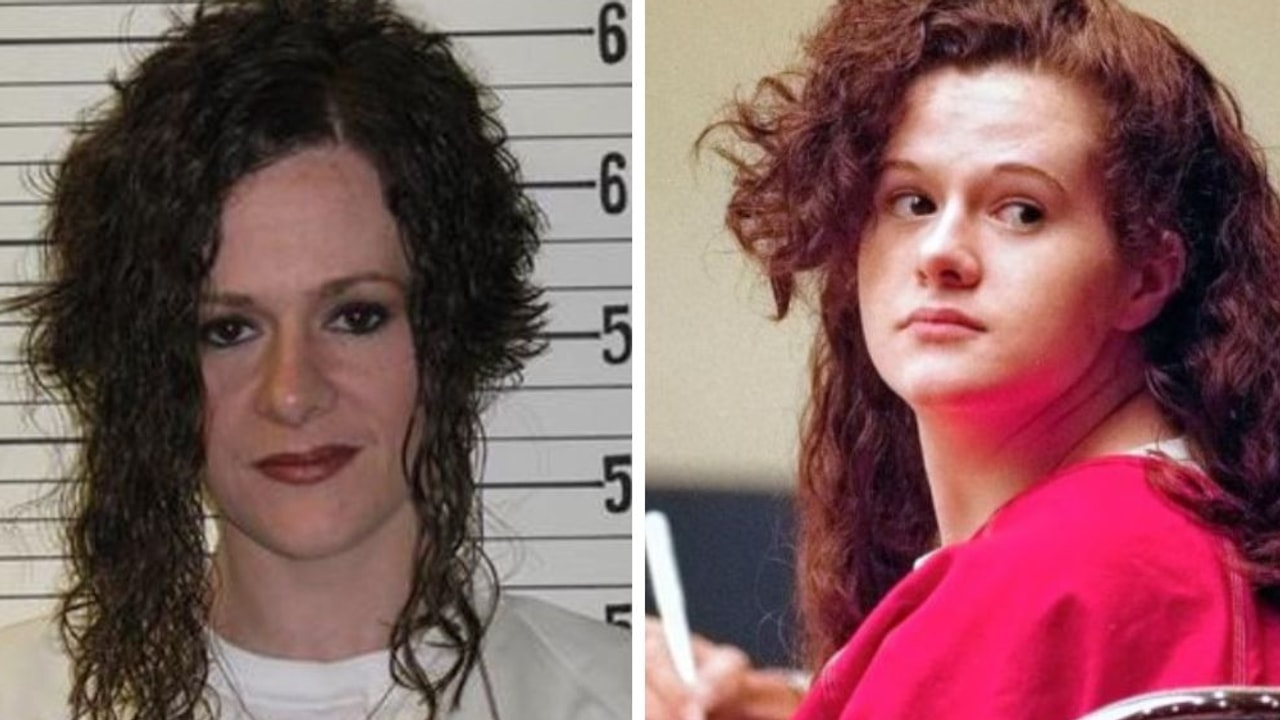
Christa Pike became the first person known to survive after lethal injection drugs actually entered her body. But she is not the only death row inmate whose execution was called off, and the list of failures is growing.
Pike, 50, was given two doses of pentobarbital in Tennessee on Wednesday night. Witnesses heard her snoring loudly more than 90 minutes into the procedure before she was rushed to a hospital. Her survival has drawn national attention to a grim reality: executions do not always work as planned.
Here are the prisoners who have lived through failed lethal injection attempts, and what happened to them.
What Happened During Pike’s Execution Attempt?
Pike’s execution was briefly halted by a federal court as her lawyers mounted a last-ditch effort, pointing to the sexual abuse she faced as a child. The Supreme Court overturned that decision, allowing the execution to proceed.
Pike’s lawyers said she had been administered two syringes of the execution drug pentobarbital but remained alive. “Ms Pike has not lost consciousness and still has a heartbeat and is audibly snoring,” they wrote.
Associated Press journalist Kim Chandler described the scene: “I would say that Pike appeared noticeably awake as the execution began.” Chandler noted that the blinds were closed to the execution chamber at 7:46 p.m. and reopened at 7:49 p.m.
“Her mouth fell open a few times and she began to loudly snore. She gasped a few times,” Chandler said. “The curtain to the execution chamber closed for the final time at 8:06 p.m. and she could be heard loudly snoring, clearly very alive, in the chamber until media witnesses were told to leave the area at about 8:53 p.m.”
List of Prisoners Who Have Survived Execution
Tony Carruthers: Carruthers was set to be executed in Tennessee on May 21, 2026, but the attempt failed. He was sentenced for a 1994 triple murder, but only one suitable vein could be found. Protocols demand that a backup line also be found. After the failed attempt, he received a year’s reprieve from the governor, who did not explain his reasoning.
Thomas Creech: Creech’s execution failed in 2024 in Idaho. The team could not find a vein, and his execution was delayed. Creech remains on death row.
Alan Miller and Kenneth Smith: Both survived failed execution attempts in Alabama. They were put to death using alternative methods in 2024.
Doyle Hamm: Hamm reached an agreement with the state of Alabama in 2018 stating he would not be subject to a second execution after executioners could not find a vein. He died of cancer in 2021.
Alva Campbell: Campbell’s execution in Ohio was halted because a suitable vein could not be found. He died of natural causes.
Romell Broom: The first person to survive an execution attempt in the 21st century was Broom. In 2009, Ohio gave up after trying to search for a vein for two hours. Before a second attempt could be carried out, Broom died of COVID-19 in 2020.
What Makes Pike’s Case Different
The Death Penalty Information Center has tracked at least seven prior instances where executions were halted because the execution team could not find a vein. Since 2009, prisoners in Alabama, Idaho, and Ohio have had executions halted due to IV difficulties.
But Pike’s case is different. In previous failures, the drugs never entered the prisoner’s bloodstream. Pike received two full doses. Austin Sarat, a professor at Amherst College and an expert on the death penalty, described the distinction: “What happened to Christa Pike was not a botched execution; it was a failed execution, and it’s very rare.”
The Aftermath
Tennessee Governor Bill Lee has suspended all executions in the state for the remainder of 2026 and ordered a comprehensive third-party review. Pike remains hospitalized in critical condition. Her attorneys have called for her death sentence to be commuted, arguing she endured what amounted to “chemical torture.”
Whether the state will attempt to execute her again remains unclear. Legal precedent suggests courts are unlikely to intervene. In 2024, the Supreme Court allowed Alabama to proceed with a second execution of Kenneth Smith after his first attempt failed. A 1947 case permitted Louisiana to attempt a second electrocution of Willie Smith.
For the families of victims, the failures have added another layer of anguish. May Martinez, whose daughter Colleen Slemmer was murdered by Pike in 1995, told reporters she was left without closure. “I didn’t get justice for my daughter,” she said.
Leave a Reply