
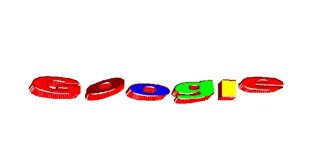
Google turned 28 on September 27, 2026, and the Doodle it chose is a deliberate blast from the past. The artwork revives the chunky, off-kilter logo from the search engine’s beta days at Stanford, and it arrives with a trivia quiz that tests how much users actually know about the company’s scrappy origins.
The celebration is more than a birthday card. It is a reminder that the world’s most powerful information company started as a dorm-room experiment called BackRub, and that its own birthday remains one of the few things Google has never bothered to pin down precisely.
A Doodle That Looks Back to 1998
The 28th birthday Doodle features a version of Google’s original logo, the thick, 3D-styled wordmark used between September 1997 and September 1998 while the project was still running on Stanford University servers. The color arrangement is noticeably different from the primary palette users know today, a detail that rewards anyone who remembers the internet cafe era.
The interactive component adds a quiz built around Google history, turning the homepage into a brief nostalgia exercise. It is a familiar move from a company that has made Doodles into a cultural institution, but the retro logo gives this one a sharper edge.
Why Google Celebrates on September 27
Here is where Google’s birthday story gets genuinely odd. The company was legally incorporated on September 4, 1998, after Sun Microsystems co-founder Andy Bechtolsheim wrote a $100,000 check to Larry Page and Sergey Brin. That is the paperwork birthday. Google has never celebrated it.
The domain name google.com was registered on September 15, 1997. The first office opened on September 7, 1998. None of these dates match September 27.
Google’s early celebrations were scattered across the calendar. In 2003, the birthday Doodle appeared on September 8. The following year it landed on September 7. By 2005, it had jumped to September 26. Only in 2006 did September 27 become the consistent date, and it has stuck ever since.
The most plausible explanation points to a major expansion of Google’s web search index announced around that time, a milestone that signaled the search engine was scaling faster than its rivals. Google itself has acknowledged the confusion. In 2013, the company admitted it had celebrated its birthday on four different dates over the years. A spokesperson once explained that with so many candidates, the whole of September effectively became Google’s birthday month.
From BackRub to a $4.2 Trillion Giant
The distance between Google’s dorm-room origins and its current scale is difficult to overstate. Page and Brin built their first search engine at Stanford in the mid-1990s, naming it BackRub because it analyzed backlinks to rank pages. The name Google came later, a deliberate misspelling of “googol”, the mathematical term for 1 followed by 100 zeros.
The first server was famously housed in a cabinet built from Lego bricks, a cheap fix for a storage problem that modern data centers would solve with racks of custom hardware. The first Doodle, drawn in August 1998, was a stick figure placed behind the second “o” to tell users the founders were at the Burning Man festival in Nevada.
Today, Google processes between 8.5 billion and 14 billion searches every day, commanding roughly 90% of the global search engine market. Parent company Alphabet carries a market value of around $4.2 trillion, trailing only Nvidia and Apple. The Lego server is long gone. The habit of doing things differently has not.
What Google Has Become
The birthday Doodle lands at a moment when Google’s identity is shifting again. The company that organized the web is now betting heavily on artificial intelligence, from the Gemini family of models to AI features woven into search itself. The nostalgic logo on the homepage sits in tension with that forward-looking strategy, a contrast that makes the anniversary feel less like a victory lap and more like a checkpoint.
For users, the Doodle is a small moment of recognition. For Google, it is a reminder that even a company built on precision has never felt the need to be precise about its own birthday.
Leave a Reply