
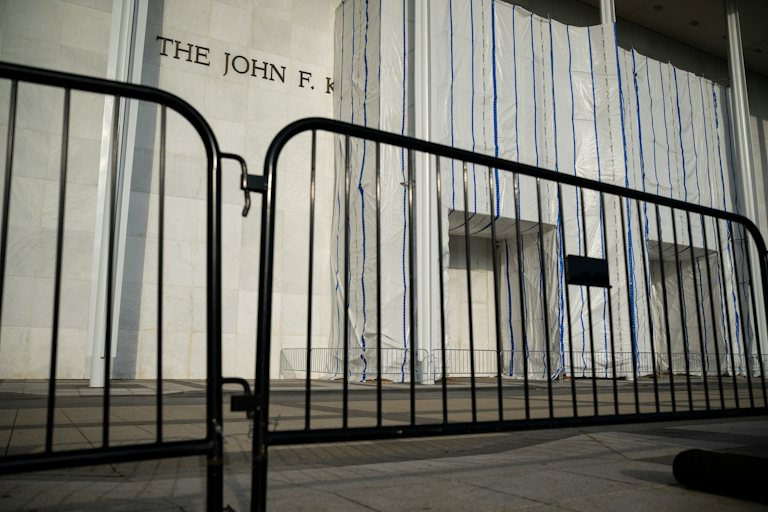
A single senator just stopped a bipartisan effort to protect the Kennedy Center from being demolished. That senator was Mike Lee. And his objection may have cleared the path for Donald Trump to tear down one of America’s most iconic cultural landmarks.
On Monday night, the Utah Republican stood up on the Senate floor and said two words that killed a one-page bill designed to prevent the president from bulldozing any congressionally designated presidential memorial without explicit approval from Congress. The bill, written by Oregon Democrat Jeff Merkley and Alaska Republican Lisa Murkowski, had bipartisan support. It needed only unanimous consent to pass.
Lee objected. And just like that, the safeguard was gone.
What the Bill Would Have Done
The Protecting Presidential Memorials Act was simple by design. It would have banned the demolition of any national memorial honoring a U.S. president, including the Kennedy Center, the Lincoln Memorial, and the Jefferson Memorial, unless Congress explicitly approved it.
The bill was written specifically in response to Trump’s threats to demolish the Kennedy Center. The president has installed himself as chairman of the center’s board, overseen sweeping changes to its programming and leadership, and threatened to tear the building down if he isn’t allowed to proceed with renovations. A federal judge has already ruled that Trump’s name was illegally added to the building and ordered it removed.
Merkley didn’t hold back in his statement after Lee’s objection.
“First, he destroyed its programming, and now, he wants to destroy the building itself,” Merkley said. “All because the law says Trump can’t put his name on the building. Trump’s threats are straight out of the authoritarian playbook and should infuriate every American who values our nation’s history and the rule of law.”
Why Lee Objected
Lee’s explanation was brief and dismissive. He told the Washington Examiner that Democrats should “join us in lowering the cost of living and securing American elections instead of wasting the Senate’s time with partisan scaremongering they haven’t even tried to run through the appropriate committee process.”
That procedural complaint is technically true. The bill was being fast-tracked via unanimous consent rather than going through the standard committee process. But the urgency of the situation, with Trump actively threatening demolition and the center already temporarily closed, made the shortcut necessary. Merkley and Murkowski serve as the ranking member and chair of the Senate subcommittee that funds the Kennedy Center, meaning they have direct oversight of the institution.
Lee also objected moments earlier to a separate Merkley motion that would have blocked Trump from building a colossal marble arch between Arlington Cemetery and the Lincoln Memorial. The pattern is clear: Lee is not interested in placing any guardrails on Trump’s power to reshape Washington.
The Kennedy Center’s Uncertain Future
The stakes could not be higher. The Kennedy Center closed temporarily on September 4 after a section of ceiling plaster fell in the Grand Foyer. The center’s leadership, installed by Trump, has used that incident to justify a two-year closure and pushed for extensive renovations. Lawyers for the center have threatened to demolish the building if renovations aren’t allowed to proceed.
But whistleblowers have alleged that Kennedy Center officials knew about the roof leaks for years and actually halted a funded repair plan in April, despite having received $9.3 million in congressional funding for roofing replacement. The implication is that the safety concerns were manufactured, or at least exaggerated, to create a pretext for demolition.
Senator Sheldon Whitehouse, the top Democrat on the Senate Environment and Public Works Committee, said the documents showed center leadership had “hoarded” congressionally appropriated funding while “blaming previous leadership for the state of repairs.”
What Happens Now
The bill is dead for now. Merkley could try again, but Lee has made clear he will object to any similar effort. The only path forward would be a full floor vote requiring 60 votes to overcome a filibuster, which is unlikely in the current Senate.
Meanwhile, the Kennedy Center remains in legal limbo. A federal judge has ordered the center to give 30 days’ notice before any major physical changes, including demolition. But that protection is temporary. Without legislation, Trump’s allies on the board could continue to push for demolition, and the courts may ultimately decide whether a president can unilaterally tear down a memorial that Congress established.
The Bottom Line
Mike Lee blocked a bipartisan bill that would have protected the Kennedy Center from demolition. He did it with a single objection, citing procedural concerns and accusing Democrats of wasting time. The result is that Donald Trump retains the ability to destroy a congressionally designated memorial to a slain president.
Whether Lee acted out of principle, loyalty to Trump, or simple indifference to the fate of a cultural institution is a question only he can answer. What is clear is that the Kennedy Center’s future now rests on a more fragile foundation than it did before Monday night.
Leave a Reply