
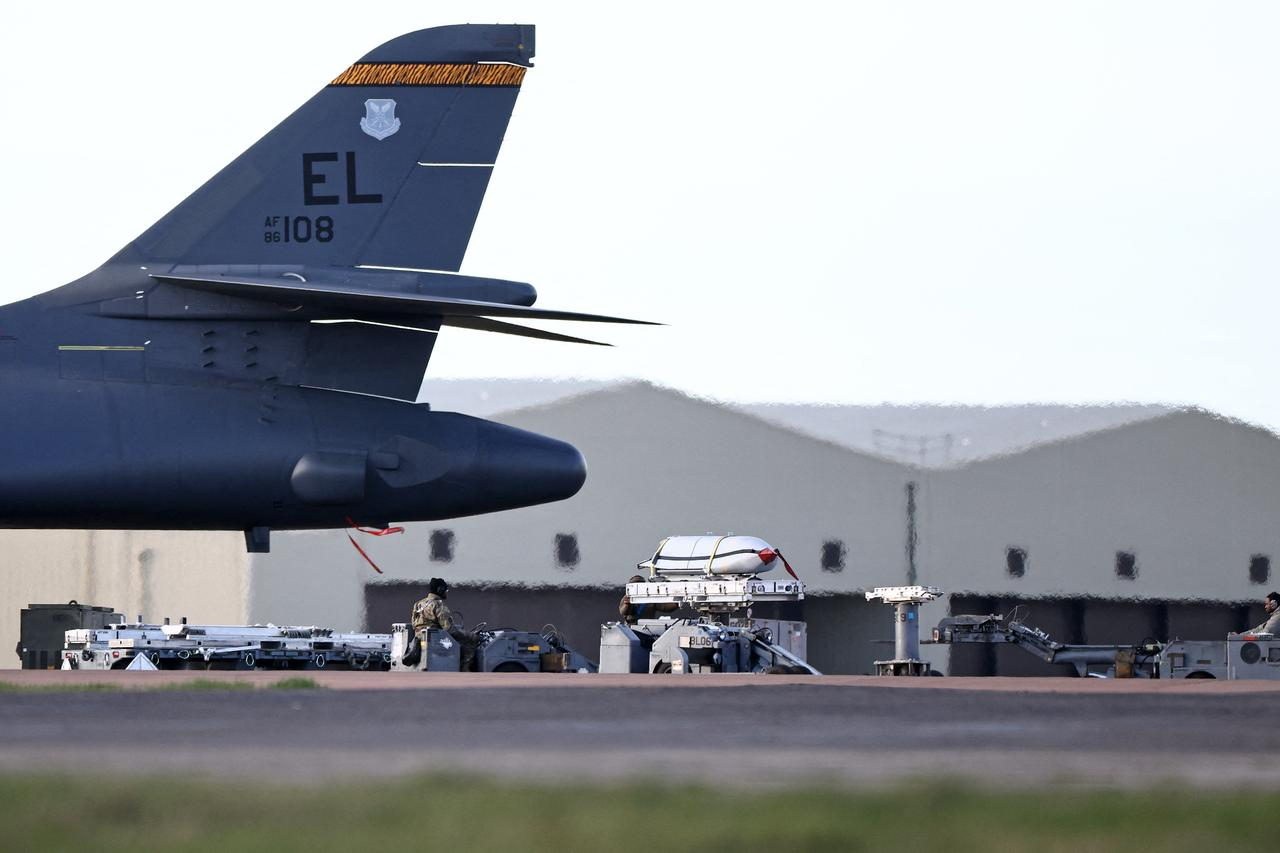
The Cotswolds military base sitting at the heart of a major counter-terrorism investigation is nestled in one of England’s most peaceful countryside settings.
RAF Fairford sits in Gloucestershire, approximately four miles south of the historic market town of Fairford, which rests along the River Coln. The base straddles the border between Gloucestershire and Wiltshire, placing it in the heart of the Cotswolds, an area renowned for its rolling hills and honey-coloured stone villages.
Exact Location and Coordinates
For those looking at a map, RAF Fairford carries the airport code FFD and sits at approximately 51.685 degrees north latitude and 1.79 degrees west longitude. The station occupies a site about 285 feet above sea level and is addressed at Fairford, GL7 4DL.
The nearest towns and villages paint a clearer picture of its surroundings. The town of Fairford lies just three kilometres away, while Cricklade sits about 6.5 kilometres to the south. The larger town of Swindon, with a population of around 184,000, is roughly 13 kilometres away, making the base accessible from a significant urban centre.
A Strategic Military Hub
Despite its tranquil rural setting, RAF Fairford plays an outsized role in global military operations. The base is home to the US Air Force’s 501st Combat Support Wing Headquarters and the 420th Air Base Squadron. It serves as the preferred bomber forward operating location in Europe for USAF Global Strike Command.
This isn’t just administrative positioning. The base’s long runway, originally built to support heavy bombers, has made it a critical launching point for American airpower. The US Air Force has used Fairford for B-1B Lancers, B-2A Spirits, and B-52H Stratofortresses, conducting long-range heavy bombing missions across multiple conflicts.
Why the Location Matters Right Now
The base has taken on heightened significance in 2026. Since March, US heavy bombers have been taking off from Fairford for what the Ministry of Defence describes as “defensive missions to destroy Iran’s missile capabilities”. This followed Prime Minister Keir Starmer’s authorisation for the US to use British bases for defensive strikes against Iranian missile sites.
The geography explains why this quiet corner of England has become a flashpoint. Fairford’s position offers strategic reach into the Middle East while maintaining the security of a well-established NATO ally. Recent reports indicate that dozens of US bombers have been deployed to the base, marking one of the largest concentrations of American airpower in the region in decades.
A Community on Edge
The base’s emergence as a strategic hub has transformed daily life for local residents. Plane spotters and nearby inhabitants have reported aircraft taking off in the early hours, with the noise so loud it shakes houses. Former USAF member William Eliason noted that locals have complained about engine tests conducted at 01:00, acknowledging that maintainers often have little choice during operational periods.
The Royal International Air Tattoo, typically held at Fairford each July and drawing around 170,000 visitors, was cancelled this year due to the ongoing conflict in the Middle East. The world’s largest military air show has become an unexpected casualty of the tensions surrounding the base.
Historical Roots in Global Conflict
RAF Fairford’s story began in 1943 when wartime construction started on the site. The base opened in January 1944 and played a direct role in D-Day operations, with troop carriers and gliders launching from its runways for the Normandy landings on 6 June 1944. It also supported airborne operations during Operation Market Garden later that year.
Control transferred to the US Air Force in 1951, beginning a relationship that has endured for more than seven decades. Over the years, the base has served as a testing centre for Concorde, a potential landing site for NASA’s space shuttle, and a staging post for operations in the Gulf War, Iraq War, and NATO bombing campaigns.
The recent counter-terrorism arrests of five men near the base have drawn fresh attention to this Gloucestershire outpost, underscoring how a location chosen for its rural isolation and strategic utility has become a focal point in global security tensions.
Leave a Reply