
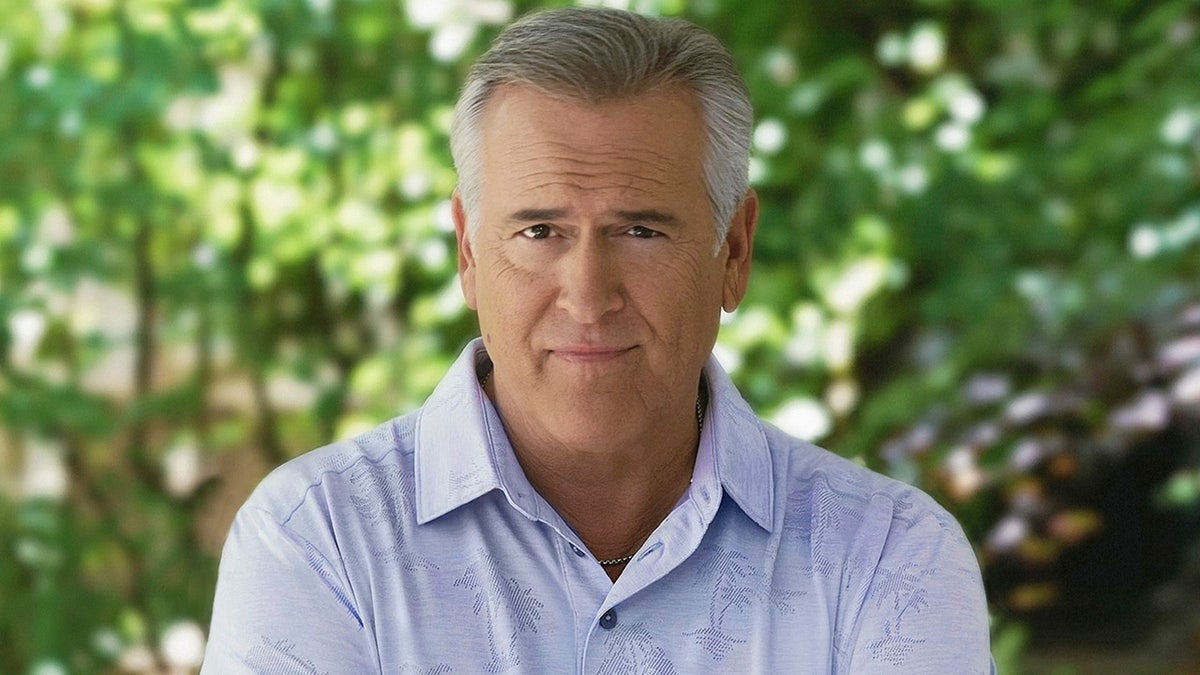
Bruce Campbell didn’t just leave Hollywood. He fled it “with his hair on fire, screaming.” The man who built a career playing Ash Williams in the Evil Dead franchise has spent the better part of three decades living in rural Oregon, far from the casting calls, parties, and studio politics of Los Angeles. And he’s never been happier.
Campbell, now 68, has been remarkably candid about why he walked away from the Hollywood machine. His reasons range from a soured early experience with studios to a fundamental distaste for the industry’s social rituals. Here’s the full story behind his exodus.
The Studio Experience That Left a “Very Sour” Taste
Campbell’s disillusionment with Hollywood started early. In a recent interview with Fox News Digital, he recalled being removed from the lead role in his first studio film.
“The first studio film I ever did, I got kicked out of the lead,” Campbell said. “The movie was re-edited, retitled and never came out. So, the taste in my mouth from studios is very sour.”
That experience shaped his entire approach to the business. The film in question was Crimewave, a 1985 release that Campbell has described as a formative disappointment. He wasn’t allowed to keep the lead despite auditioning for it, and the studio reworked the project entirely.
It was a lesson he never forgot.
“What the Hell Am I Doing in This City?”
By the late 1990s, Campbell had reached a breaking point. He was in his early 40s, working steadily but increasingly disillusioned. He asked himself a simple question: Why am I still here?
“When I was 40, I just was like, ‘What the hell am I doing in a city that I never would have lived here if it wasn’t for the film business?’” he recalled on Michael Rosenbaum’s podcast.
His wife, costume designer Ida Gearon, felt the same way. One day, returning from a trip, the couple made a pact: they’d leave Los Angeles within five years. Campbell drew up a chart showing where he’d worked in 1997. Seventy percent of his film and TV work had taken place outside of Los Angeles. Why was he still paying California prices and dealing with Hollywood nonsense?
The five-year plan became a one-year plan. In 1998, they moved to Oregon.
The Anti-Hollywood Mindset
Campbell has never pretended to enjoy the social side of show business. He’s said he never went to Hollywood parties and couldn’t name three casting agents in the entire city.
“I never understood what that had to do with your actual work,” he said. “It drives me insane.”
He’s also been openly baffled by actors who reach a certain level of success and then pivot to selling fragrances or clothing lines instead of acting.
“I watch an actor or actress get to a certain point, then they disappear because they’re doing a clothing line and a fragrance. Where’d the acting go?” he asked. “It’s like they get tired of it. They just want to make the easy money.”
For Campbell, the craft matters more than the celebrity. That conviction drove him out of Los Angeles and into a life where he could “run my own show, nobody’s telling me what to do.”
Life in Oregon: “I Like Living Where People Don’t Kiss My Ass”
Campbell settled in the Applegate Valley of southern Oregon, on a property surrounded on three sides by Bureau of Land Management land. The decision was partly practical, partly emotional. His mother lived in nearby Ashland, and the couple wanted land, privacy, and a slower pace.
He found something else there too: a community that didn’t treat him like a celebrity.
“Ranchers and loggers, they aren’t impressed with an actor,” Campbell said. “The week after I moved in, a guy came up, ‘I understand you played a cowboy in a TV show.’ I said yeah. He said, ‘So why don’t you help me run a couple hundred head of cattle up the road.’ So that’s a much healthier approach to your neighbors than kissing your ass. I like living where people don’t kiss my ass.”
The move wasn’t without its fears. Campbell admitted that leaving Los Angeles came with a nagging worry: “They’re not going to remember who you are.” But he reframed it as a test of his own value.
“To me, it left a signal: ‘I don’t need this. If you need me, I’ll be around. Come and find me.’”
The Career Didn’t End, It Changed
Leaving Hollywood didn’t mean leaving the business. Campbell continued working steadily, but on his own terms. He landed the role of Sam Axe on Burn Notice in 2007, a show that ran for six seasons and was filmed in Miami. He’s voiced characters in animated projects, written bestselling memoirs, and become a beloved fixture on the convention circuit.
He’s also remained fiercely loyal to his roots. The Evil Dead franchise, born from a low-budget independent film he made with Sam Raimi in 1981, has continued to thrive. Campbell starred in the Starz series Ash vs Evil Dead for three seasons and appeared in the 2023 film Evil Dead Rise.
“The very first movie we did, ‘Evil Dead,’ was the only other movie I’ve ever done free and clear of the studio system,” Campbell said. “So, I liked the taste of it early on.”
Ernie & Emma: A Return to True Independence
In 2026, Campbell took his independence to the next level. He wrote, directed, produced, and starred in Ernie & Emma, a small-town drama filmed entirely in southern Oregon with his wife, Ida Gearon, serving as producer.
The film follows Ernie Tyler, a pear salesman who travels across Oregon after his wife’s death, carrying her ashes and following letters she left behind. It premiered locally in Medford rather than in Los Angeles.
“It was time to be unbridled in my life,” Campbell said of the project.
“Creative freedom is absolutely everything,” he added. “If you consider yourself an artiste, or you’re in the arts, the only way that artists have to deal with people, outside of themselves, is to go look for money.”
The project carries extra weight following Campbell’s cancer diagnosis, which he disclosed in March 2026. He described it as a “treatable” but not “curable” type of cancer, and he’s been candid about the fact that treatment takes priority over work.
Why It Matters
Bruce Campbell’s departure from Hollywood isn’t a story of failure. It’s a story of refusal. He refused to play the game, refused to kiss the ring, refused to let an industry define his worth. And in doing so, he built something more durable than a studio career: a life on his own terms.
He once said that giving up on Hollywood gave him his best role yet. For a man who has spent decades as a cult icon, that might be the most meaningful role of all.
Leave a Reply